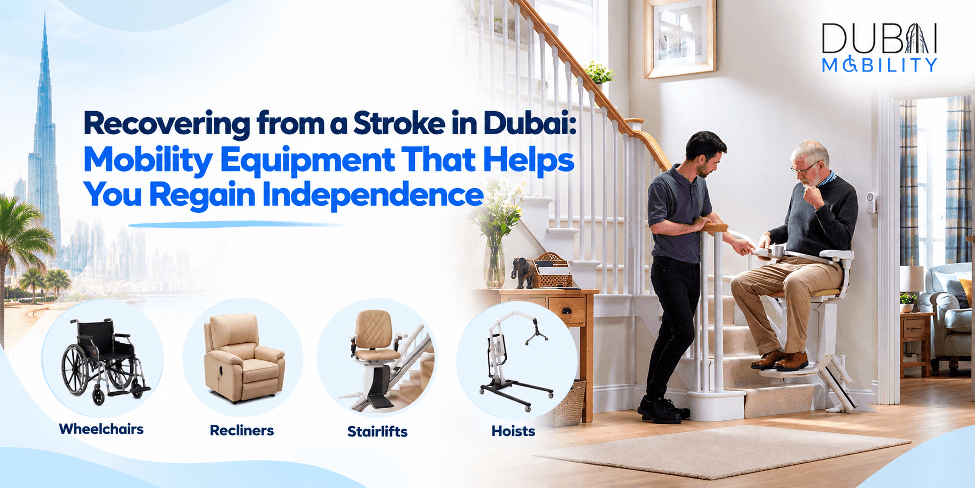







Coming home after a stroke can turn ordinary moments into hard ones. Getting up from the sofa. Reaching the bedroom upstairs. Moving from the bed to a chair. The right equipment can take some of the strain out of each of these, but what you need depends on what has become difficult, and your rehabilitation team should judge that first.
Dubai Mobility supplies equipment for all of these across the UAE: wheelchairs, chairs that help you stand, stairlifts, home lifts and patient hoists. This guide is laid out by the problem rather than the product, so you can skip to the part that fits.
Before you buy anything, talk to the physiotherapist or occupational therapist. The Dubai Health Authority’s stroke standards treat rehabilitation as something that starts in hospital and carries on after the person leaves. They expect rehabilitation clinics to look at the need for wheelchairs, equipment and other assistive devices, and to review and train carers. Patients and carers should also be well informed about the rehabilitation plan for after they leave the stroke unit.
That makes the therapy team the right people to ask:
Questions about the stroke itself, or about exercise and recovery, stay with the doctor or therapist. What follows is about the equipment.
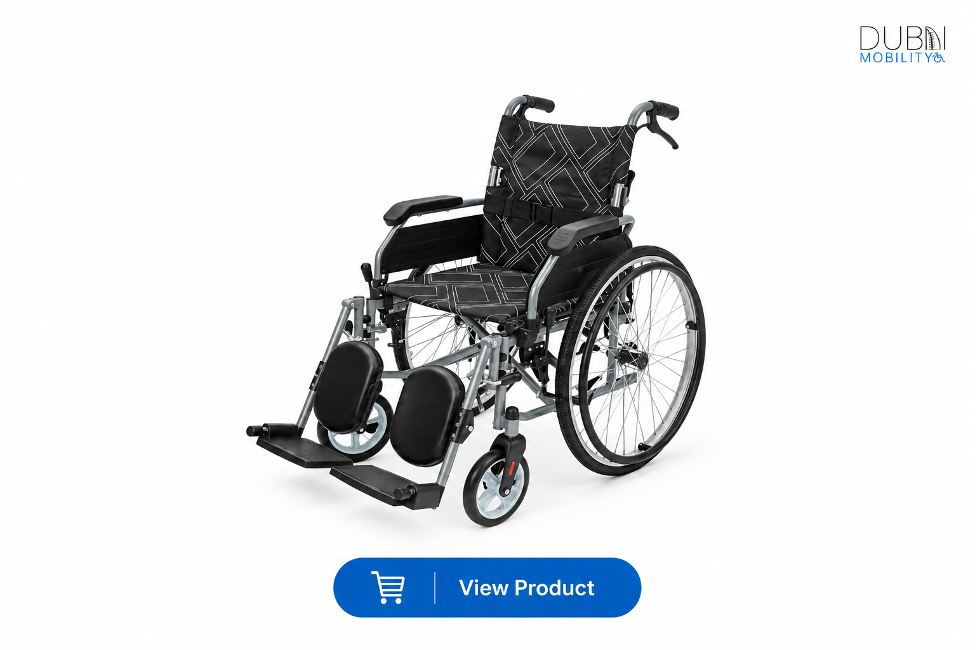
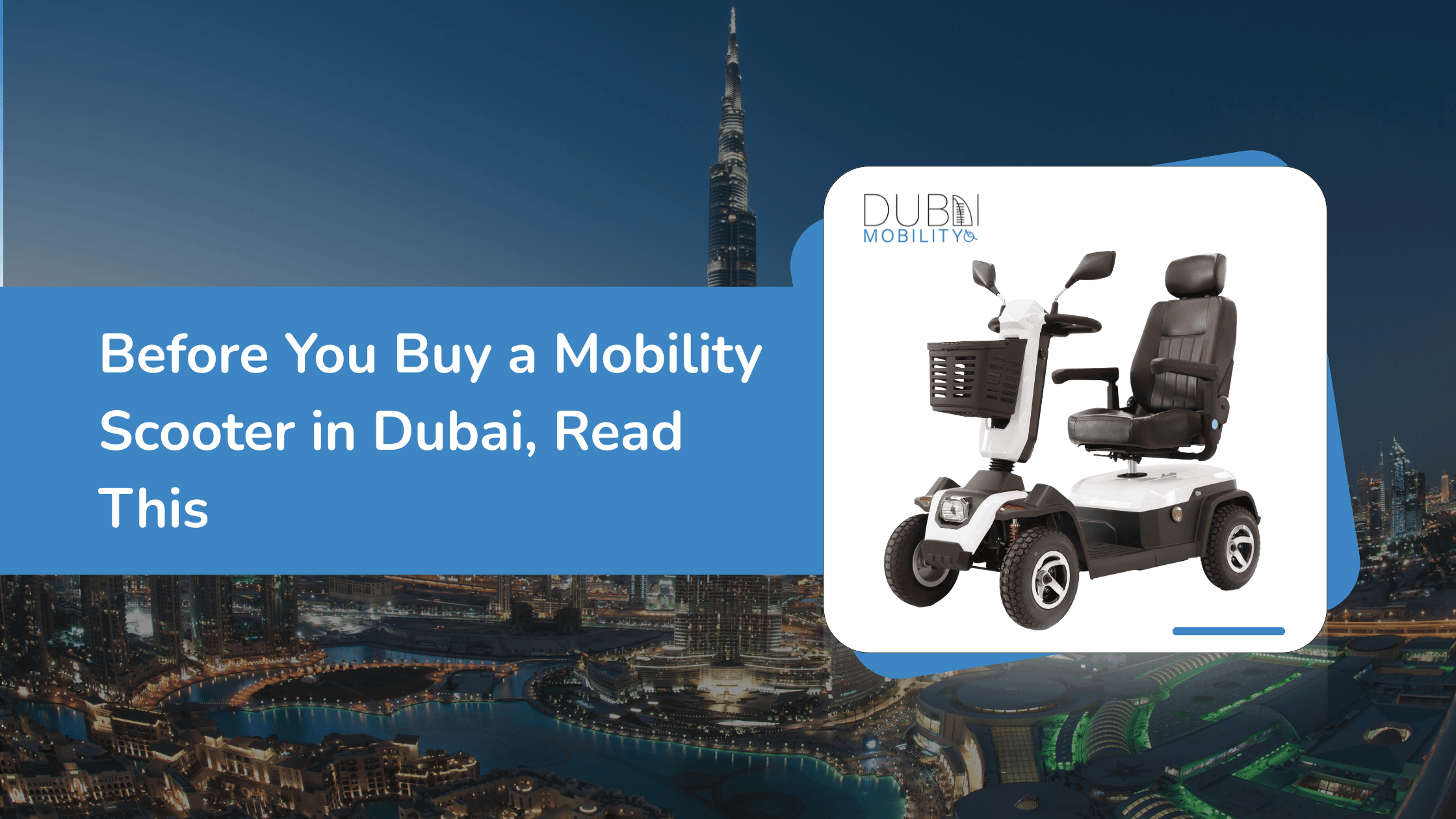
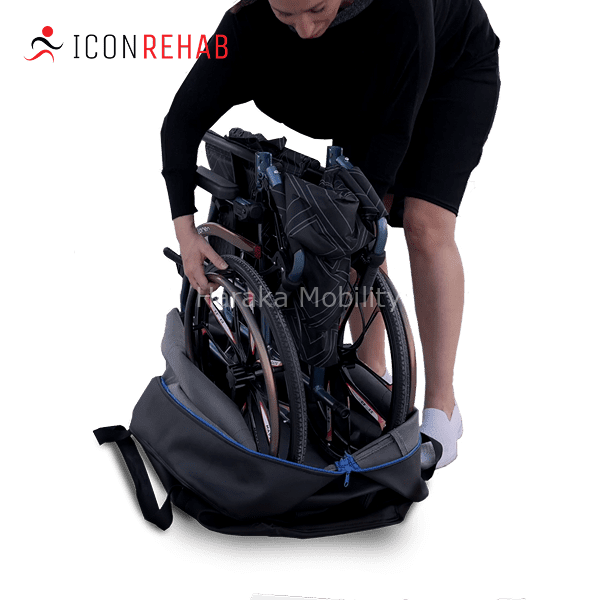
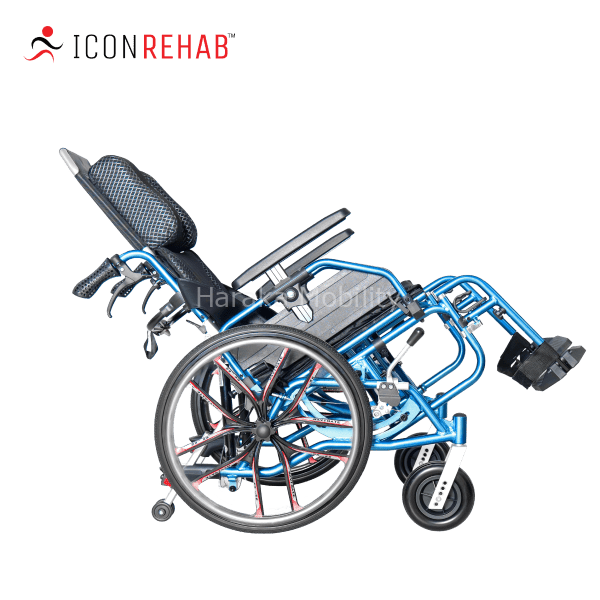
The first choice is who does the pushing. A self-propelled wheelchair has large rear wheels with hand rims, so the user can move themselves. A transit wheelchair is pushed by a carer, and is lighter and more compact for occasional use.
Manual wheelchairs at Dubai Mobility start at AED 550 for a basic folding chair meant for short trips and go up to AED 8,900, with lightweight, heavy-duty, bariatric and reclining models in between. The team checks seat size and fit before you choose, and you can test drive chairs at the showroom for free.
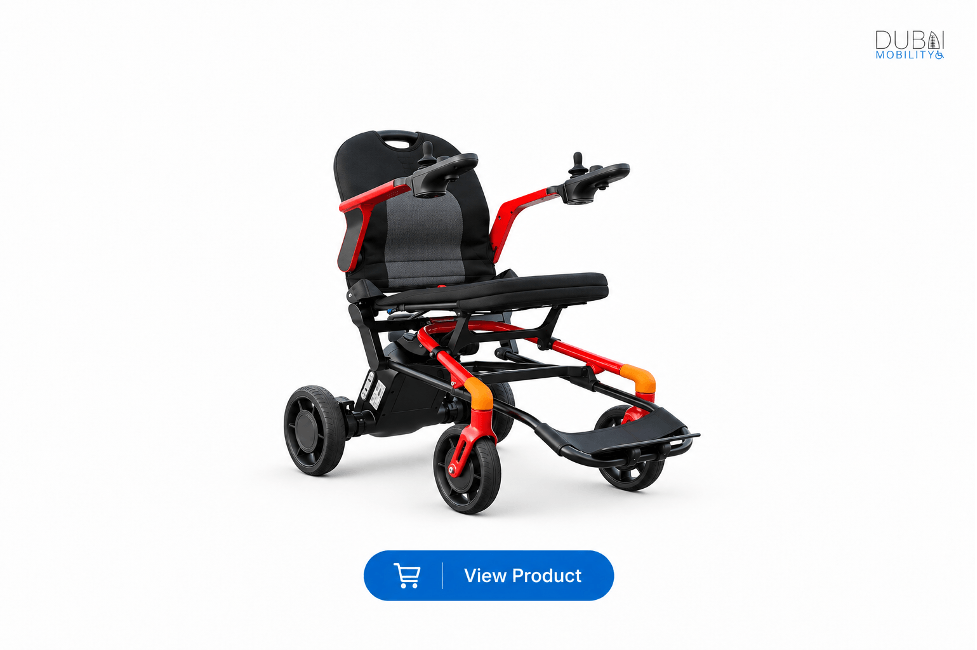
If pushing isn’t realistic, an electric wheelchair, also called a power chair, runs on a battery and is driven with a joystick. Folding models start at AED 8,500. Some raise the seat, which the page says helps with reaching, talking at eye level and transfers. Rehab models add tilt and recline for more complex seating needs. You can ask for a free demonstration at home before you buy.
Both can also be rented while you decide. A manual wheelchair costs AED 30 a day and a folding electric wheelchair AED 180 a day, with no minimum rental period.
A riser recliner is an armchair with a motor that lifts you gently towards standing at the touch of a button, then lowers you back down to sit. Our models have rise action and controls that can be used with either hand as features that help people with limited mobility.
There are two kinds. On a single-motor chair, the backrest and leg rest move together. A dual-motor chair moves them separately, so you can raise your legs while sitting upright. The range covers users up to 150 kg, with a made-to-measure bariatric chair rated to 190 kg, in leather or fabric.
Size matters more than it looks. If the seat depth or height doesn’t match the person, the rise won’t lift them correctly, so ask for a home demonstration and sit in the chair before you commit.
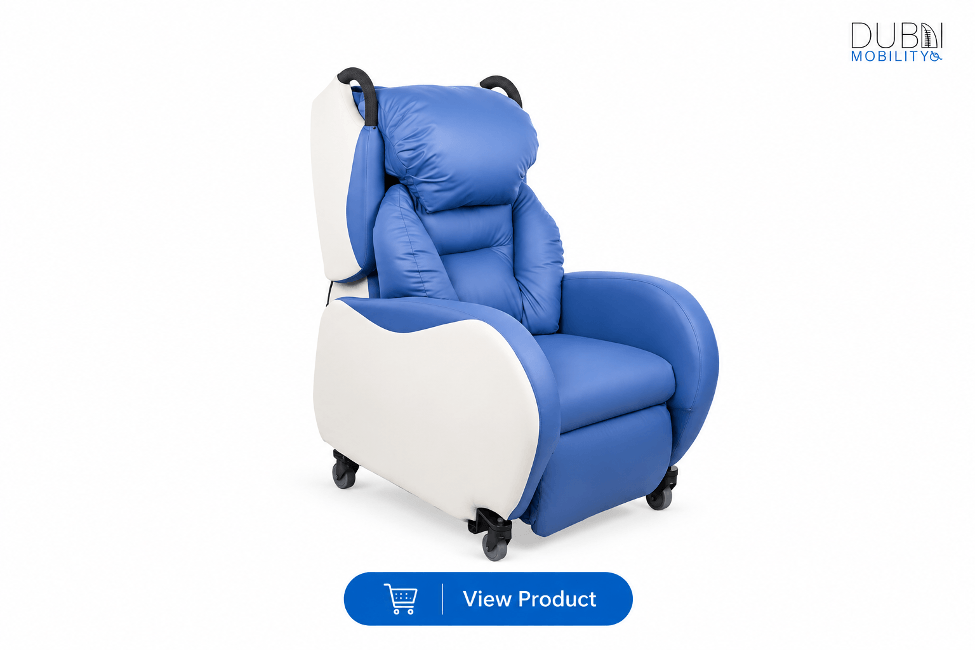
For someone who spends long periods sitting and can’t shift their own position, there are neuro chairs. They tilt the whole seat and back together to move pressure around, take a hoist for transfers and sit on braked castors so a carer can move them between rooms. These are specialist seats, and Dubai Mobility’s own advice is not to buy one without specialist guidance.
Dubai Mobility offers two ways to deal with stairs in a villa.
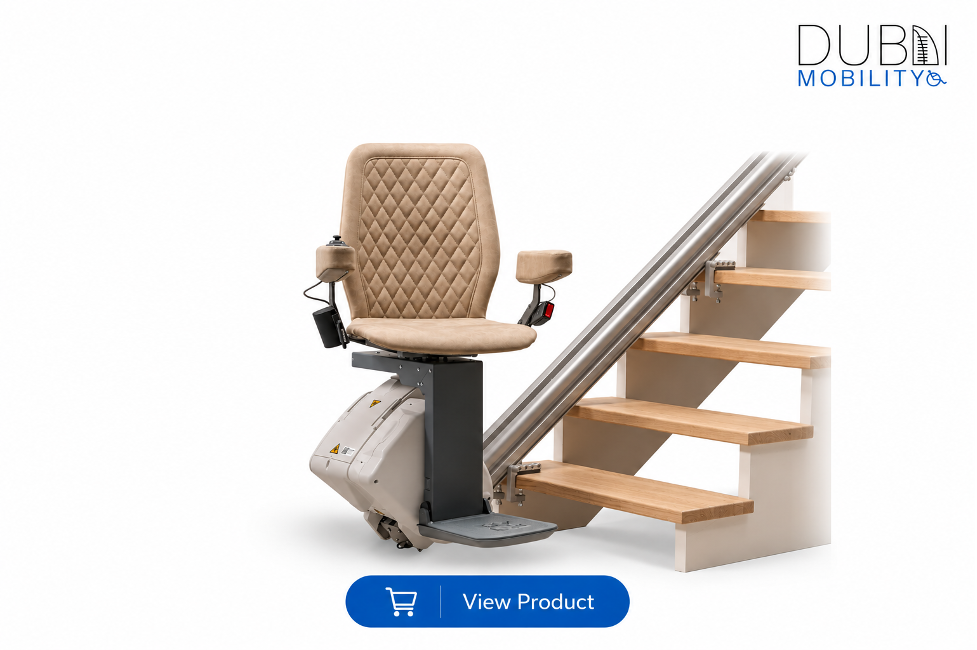
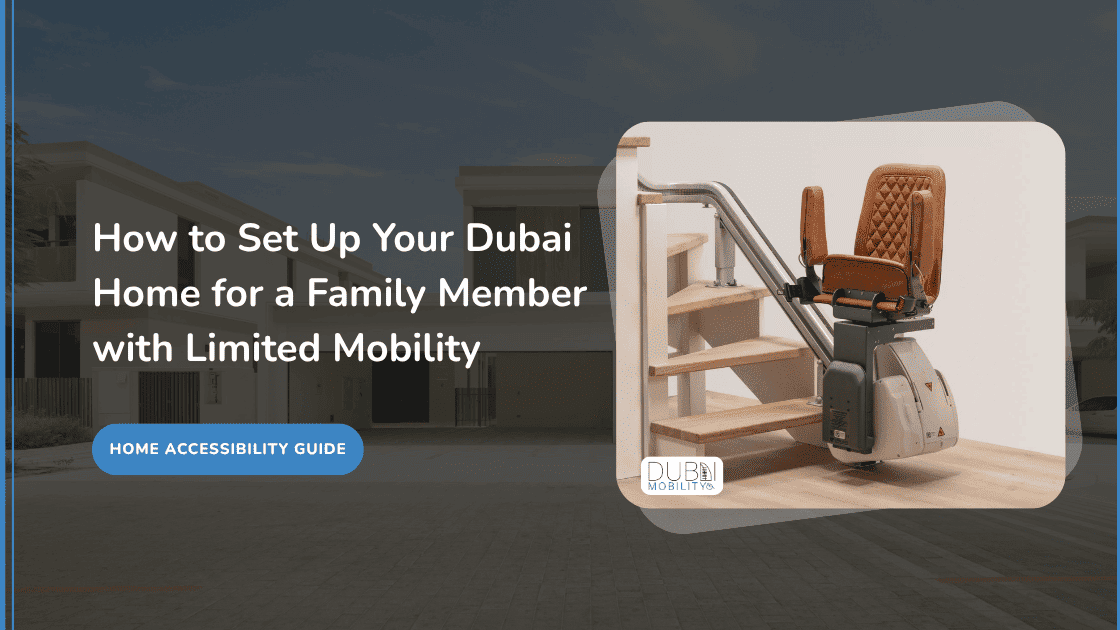
A stairlift, or stair chair, carries a seated person on a rail fixed to the stair treads, so nothing is drilled into the walls. It fits straight, curved and narrow staircases, and the seat swivels at the top to make getting off easier. There’s no fixed price. An advisor measures the staircase at a free home assessment, and the quote depends on the shape, the number of turns, the length, anything in the way at either end and the finish you choose. Next-day installation is offered, depending on that assessment, and the first year of service is free.
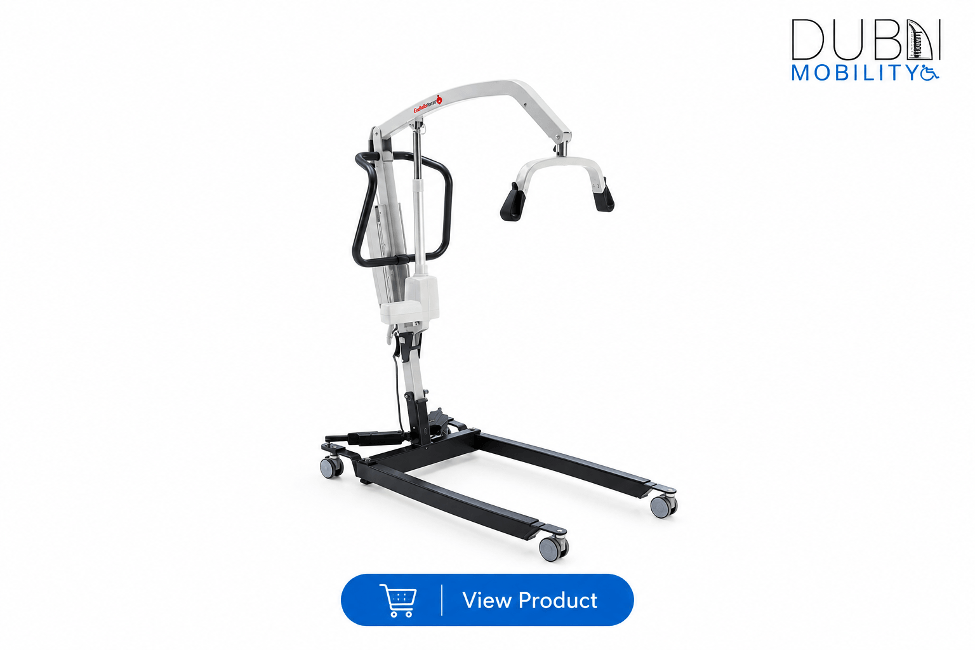
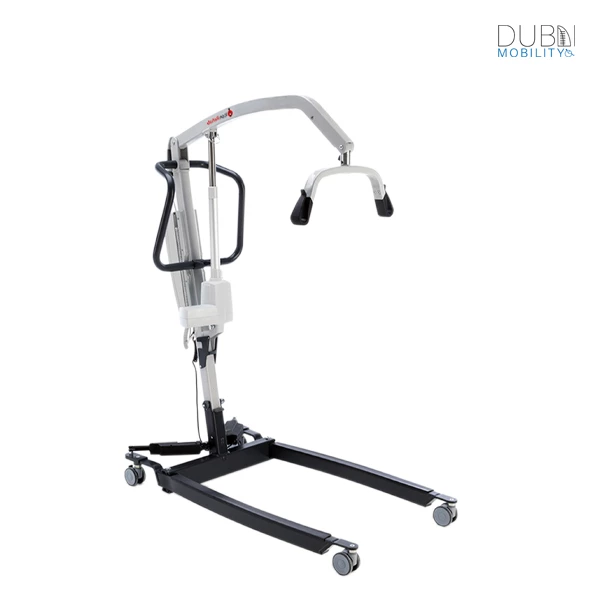
A patient hoist lifts the person in a sling and moves them between bed, chair, wheelchair, toilet or bath, so nobody lifts them by hand. Dubai Mobility’s portable hoist is made for small rooms. Its base is 640 mm wide for narrower doorways, it turns in 1,400 mm, and the battery manages up to 40 lifts per charge. It comes in 150 kg and 180 kg versions.
The sling is sold separately and depends on the transfer: general, toileting or bathing. A hoist also rents for AED 150 a day, which suits the weeks when needs are still changing. Whoever uses it should be shown first.
Share your details and we'll confirm delivery to your Dubai hotel.
We respect your privacy. Your details are used only to respond to your enquiry.
Renting makes sense while needs are still changing. Rehabilitation carries on after discharge, so what helps in the first week’s home may not be what’s needed later. Wheelchairs, electric wheelchairs and hoists can all be rented by the day.
Once the therapy team expects a long-term need, buying makes more sense, and Dubai Mobility’s own rental advice says the same for UAE residents. If the person is visiting the UAE rather than living here, renting avoids having to take anything home.
Visitors aren’t left out of everything. The RTA’s personal nol card page says a visitor needs a Sanad Tourist card from the Dubai Now app before applying for the nol card.
Dubai Mobility sells, installs and rents mobility equipment across the UAE, and supplies individuals, hospitals, charities and government healthcare providers. For someone coming home after a stroke, that means one place to ask about the wheelchair, the chair, the stairs and the transfers.
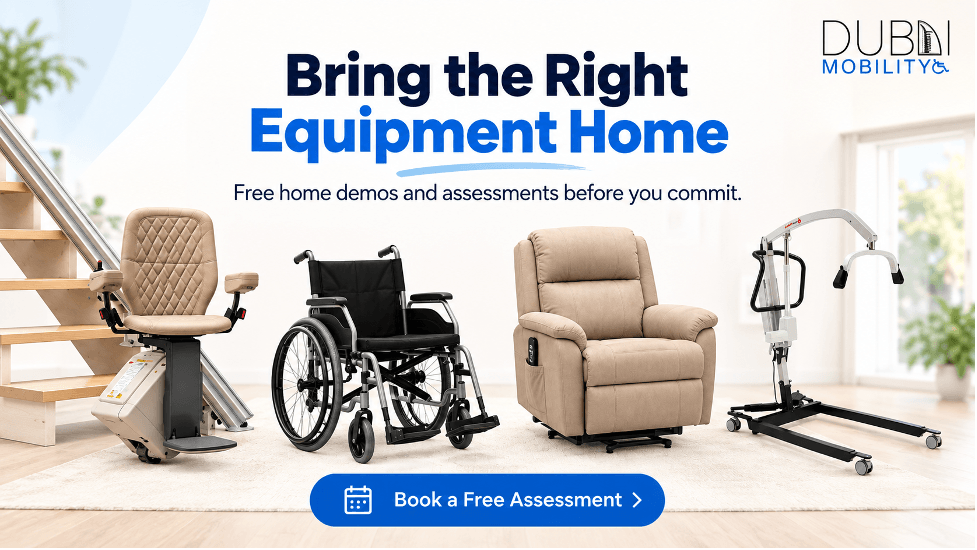
When you compare medical equipment suppliers in the UAE, ask whether you can try things first. Here, wheelchairs can be test-driven at the showroom, electric wheelchairs and riser recliners can be demonstrated at home, and stairlifts and home lifts start with a free assessment.
Where can I get medical equipment in Dubai for a stroke patient at home?
Dubai Mobility supplies wheelchairs, electric wheelchairs, riser recliners, neuro chairs, stairlifts, home lifts and patient hoists across the UAE. Wheelchairs, electric wheelchairs and hoists can also be rented.
How much does it cost to rent a wheelchair in Dubai?
A manual wheelchair costs AED 30 a day and a folding electric wheelchair AED 180 a day. There’s no minimum rental period.
What’s the difference between a single and dual motor riser recliner?
A single-motor chair moves the backrest and leg rest together. A dual-motor chair moves them separately, so you can raise your legs while sitting upright.
Should I get a stairlift or a home lift for my villa?
A stairlift carries a seated person along a rail on the stairs. A through-floor home lift suits homes where a stairlift isn’t practical, and one version carries a wheelchair user without a transfer. Both start with a free home assessment.
Is there home care for stroke patients in Dubai?
Dubai Health’s Reaya programme provides rehabilitative and other care at home for eligible patients. Call 800588 to ask whether the person qualifies.
Enter Your Details: Provide your name, phone number and email.
Your Requirements: Let us know if you have any specific need or question
We’ll handle the rest: We’ll get back to you within 24 hours and provide the information you need.

To provide the best experiences, we use technologies like cookies to store and/or access device information. Consenting to these technologies will allow us to process data such as browsing behavior or unique IDs on this site. Not consenting or withdrawing consent may adversely affect certain features and functions.